

What Is Concrete? From history to production, applications, and the effects of admixtures in modern concrete محتوای مقاله Concrete is one of the most widely used construction materials in the world. It is produced by combining cement, water, and aggregates, and after hardening, it achieves very high strength. Concrete is essentially an artificial stone that engineers use to construct structures such as buildings, bridges, dams, tunnels, roadways, and large-scale civil engineering projects.The popularity of concrete is attributed to its high durability, excellent compressive strength, cost-effectiveness, wide availability of raw materials, and ease of molding into various shapes. For ...

Concrete Strength in Practice: Formulas, Tables, and Execution Notes محتوای مقاله In this comprehensive guide, you will learn everything about concrete cement content (concrete mix cement content)—from its definition and concept, to what cement content actually means, how to convert cement content to compressive strength, and the relationship between strength and cement content. Practical tables for various concrete cement contents, cement-content charts, and the cement-content formula are also included. Furthermore, methods for converting megapascals to cement content, as well as detailed engineering analyses of lean concrete (blinding concrete) cement content and foundation concrete cement content, are thoroughly explained to ...
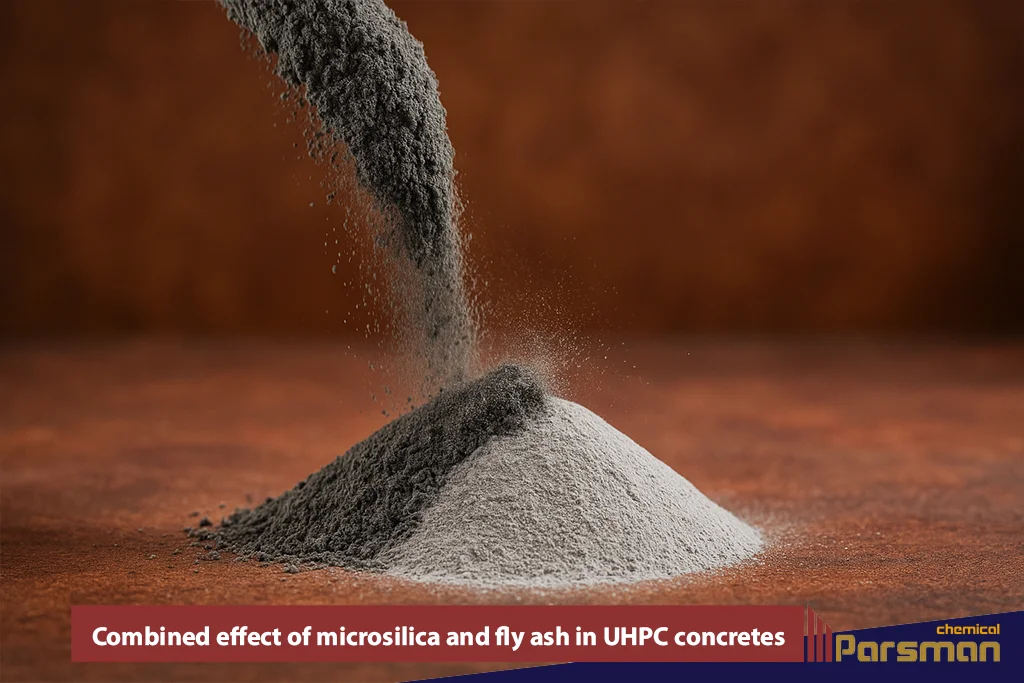
Combined Effect of Silica Fume and Fly Ash in UHPC Proposed Article Structure The combination of silica fume (SF) and fly ash (FA) as a partial replacement for cement in concrete is considered one of the advanced approaches in modern concrete technology. This blend creates a synergistic effect that enhances the performance of concrete in both the short and long term.Ultra-High Performance Concrete (UHPC), due to its high density and exceptional strength, requires a precise mix design to achieve its desired properties. Among the key supplementary cementitious materials, silica fume and fly ash play a crucial role. When ...

Gotthard Concrete Tunnel – Secrets of the World’s Longest Concrete Tunnel The Gotthard Base Tunnel is a remarkable masterpiece of modern engineering. Stretching 57 kilometers through the depths of the Swiss Alps, it is not only the longest railway tunnel in the world but also the deepest. To maintain a consistent rail gradient, engineers had to dig the tunnel as deep as 2.3 kilometers beneath the mountains.The tunnel consists of two single-track tubes for train traffic, accompanied by passenger-related infrastructure, shafts, ventilation and safety tunnels. Altogether, the complete tunnel system spans over 152 kilometers, and approximately 28....

کاهش ترکهای حرارتی بتن با کمک افزودنیها Strategies for durability in harsh climates محتوای مقاله Thermal cracks typically appear in the early days after concrete placement, especially in mass concrete structures or under conditions with significant temperature fluctuations. This phenomenon occurs when the internal temperature of the concrete rises sharply due to the heat of cement hydration, while the surface, exposed to cooler air or wind, cools down more rapidly. This temperature gradient creates tensile stresses at the surface, which, if exceeding the tensile strength of the concrete, result in cracking. Thermal cracks not only affect the aesthetic appearance ...

The Rise of Nanotechnology in Construction: The End of Traditional Methods? In recent years, nanotechnology has emerged as one of the most advanced scientific breakthroughs, rapidly making its way into the construction industry. With a focus on enhancing material quality, improving structural strength, and increasing energy efficiency, this technology is redefining the traditional boundaries of architecture and civil engineering. Construction today is no longer limited to concrete and bricks—it's about integrating intelligent technologies to build structures that are both resilient and sustainable.At the core of this transformation lie nanomaterials such as nanosilica, carbon nanotubes, and titanium dioxide—ultrafine particles ...